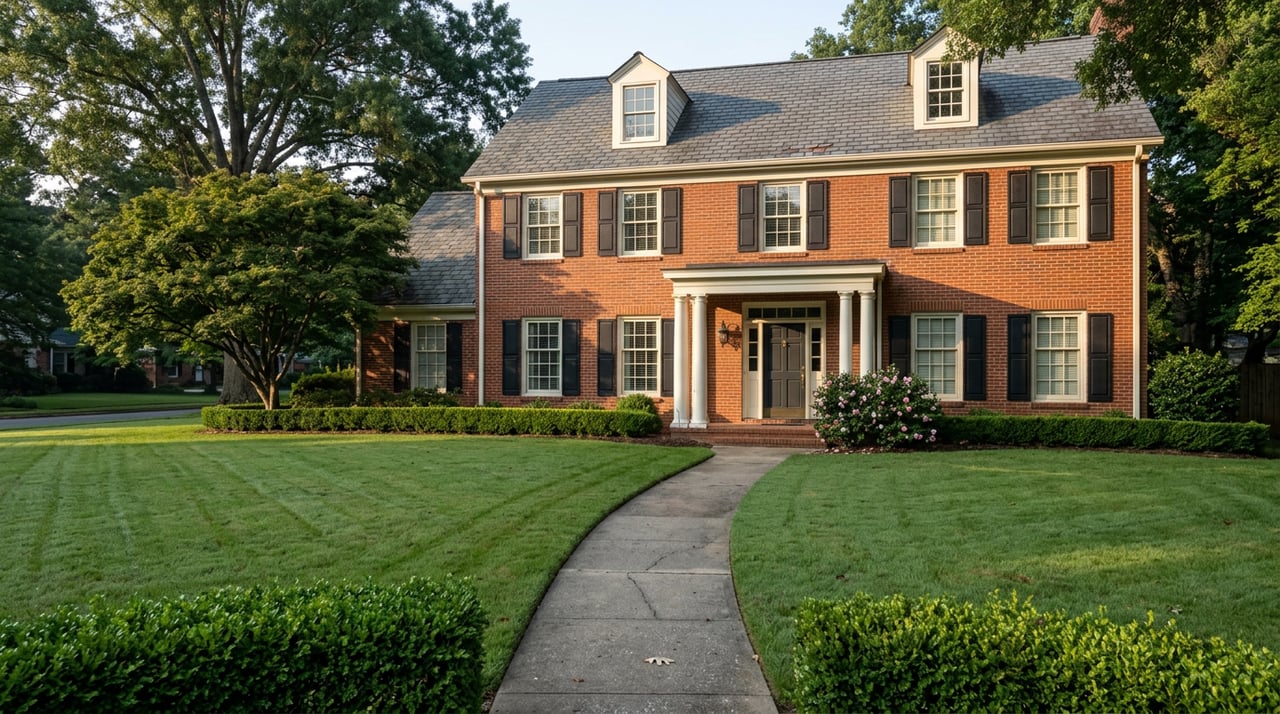
"What are we going to do when we run out of revenue?"
That question came from Alderman Kit Kitchens at Hernando's Board of Aldermen meeting on September 1, 2026, in the middle of what's usually one of the quietest items on a city calendar: adopting next year's budget. The board passed it, then un-passed it, as tension over specific line items boiled over in the room. Earlier that same meeting, aldermen had separately passed the fiscal year 2027 property tax rate itself, holding it at 35.76 mills, the same rate Hernando homeowners paid this year. As of the most recent reporting, the tax rate stands. The broader budget document does not yet have the same certainty.
On paper, that sounds like stability. If you're comparing Hernando to Southaven or Olive Branch based on a portal's median price, a flat millage rate reads like a settled number you can plug into a mortgage calculator and move past. The vote that produced it says otherwise. Hernando held its rate steady this year not because the city's finances are calm, but despite a year that included a multi-million dollar accounting shortfall and a budget session tense enough that the board briefly reversed itself. That gap between the number and the story behind it is worth understanding before you write an offer here.
The Reassessment That Started All of This
In 2025, the Mississippi Department of Revenue directed county assessors statewide to bring property values closer to fair market value. DeSoto County Tax Assessor Jeff Fitch told county supervisors his office had been running assessments at roughly 56 percent of market value and now had to move to at least 85 percent, the state's minimum. That single change pushed taxable values up across every city in the county, whether or not a given home had sold or changed hands.
Cities responded by cutting their millage rates to soften the jump. Hernando's Board of Aldermen cut the city's rate by five mills in August 2025, landing at 35.7654 mills. Olive Branch went further, dropping its rate 8.96 percent to 35.05 mills, which Mayor Ken Adams noted keeps it the lowest municipal rate in DeSoto County. Neither city was chasing extra revenue. Both were trying to keep a state-mandated reassessment from turning into an accidental tax increase.
That's the backdrop for why "flat" matters this year. A flat rate sitting on top of an already-adjusted base is a different signal than a flat rate sitting on top of untouched assessments. The cities already used their one easy lever. Whatever pressure shows up next has fewer places left to go.
How the Cities Compare This Cycle
| City | FY2026-27 Millage | What Changed |
|---|---|---|
| Hernando | 35.76 mills | Held flat, after a 5-mill cut the year before |
| Olive Branch | 35.05 mills | Held flat, after an 8.96% cut the year before |
Southaven and Horn Lake also kept their rates unchanged for the coming fiscal year, according to Daily Memphian reporting from September 3, 2026. Every city in the county looks identical on a rate table right now: no increase. What the table doesn't show is how much room each board has left before it has to move the number again.
What Was Actually Straining the Budget
In February 2026, Mayor Chip Johnson told the Board of Aldermen that Hernando's utility fund was facing a $2.6 million deficit, the product of accounting errors and a waste disposal cost that had climbed 16 percent a year without a matching increase in what the city collected to cover it. Johnson took responsibility for the miscalculation. The board's fix was a trash fee increase from $22 to $28 a month for city utility customers.
That's a utility fund problem, not the general fund the millage rate feeds. But it's the same city government working through the same budget cycle, seven months before the aldermen would sit down to pass the FY27 property tax rate. Kitchens' question about running out of revenue wasn't rhetorical. It came from a board that had just patched one hole asking what happens when the next one opens somewhere else, and it's a fair question to ask before you assume this year's flat rate tells you much about next year's.
What This Means If You're Comparing Cities
None of this means Hernando is a risky place to own a home. Plenty of well-run cities have a rough budget year. It means the flat number on this year's tax bill is a snapshot of a board actively managing pressure, not a settled equilibrium. If you're buying with a five- or ten-year hold in mind, that's worth factoring into how you think about carrying costs, the same way you'd weigh an HOA that hasn't raised dues in three years but is sitting on a thin reserve fund.
The Other Number Buyers Miss: Assessment Ratio
There's a second mechanic in Mississippi's system worth knowing before you compare a Hernando listing to one elsewhere. Owner-occupied homes in DeSoto County are assessed at 10 percent of true value for tax purposes. Other property, including a home you buy as a rental, is assessed at 15 percent. That's a state-level formula, not a Hernando quirk, but it changes the math meaningfully if you're comparing an owner-occupant's carrying cost against an investor's carrying cost on the same house. A rental bought at the same price as the owner-occupied home next door can carry a noticeably higher tax bill from the assessment ratio alone, before the millage rate even enters the calculation.
If you plan to live in the home, filing for the homestead exemption matters more than the sticker price of the millage rate. DeSoto County's Tax Assessor's Office accepts applications each year between January 1 and April 1, in person at the office on Losher Street in Hernando. Missing that window means paying the higher, non-homestead rate for the year.
A Short Checklist Before You Write an Offer in Hernando
- Ask for the parcel's current assessed value, not just the listing price. The reassessment already happened, so your number should reflect it.
- Confirm whether the property sits inside Hernando's city limits or in unincorporated DeSoto County. City millage only applies inside the limits, so two nearby addresses can carry different tax loads.
- If you're buying as your primary residence, file for the homestead exemption between January 1 and April 1 the year after closing.
- If you're buying as a rental or investment, run your numbers at the 15 percent assessment ratio, not 10 percent, so your cash flow projection matches the actual bill.
- Keep an eye on the city's budget calendar. Hernando's board meets the first and third Tuesday of most months, and decisions made in one cycle tend to show up on the following year's tax bill.
Frequently Asked Questions
Did Hernando's property taxes go up this year? The city's millage rate did not increase for fiscal year 2026-2027. It was held at 35.76 mills, the same rate set after a five-mill cut in August 2025. Whether an individual bill rises depends on that property's assessed value, which can change independent of the rate.
What is a mill, in plain terms? One mill equals one dollar of tax for every one thousand dollars of a property's assessed value, not its market value. A homestead exemption and the 10 percent assessment ratio for owner-occupied homes both apply before the millage rate calculates the bill.
Does the utility fund shortfall affect my property tax bill? Not directly. The $2.6 million utility fund deficit and the resulting trash fee increase are billed separately from property taxes. The connection is timing and capacity: the same board managing that shortfall is the one setting the millage rate, and both issues surfaced in the same budget year.
Numbers like these are exactly why a median price on a listing page only tells part of the story. If you're weighing Hernando against another DeSoto County suburb and want someone who reads the budget minutes as closely as the MLS sheet, Chad and Deanna Wardlaw at Move With Wow work this market every week. Schedule a consultation and we'll walk through what a specific address's tax history actually looks like, not just what the county average suggests.


