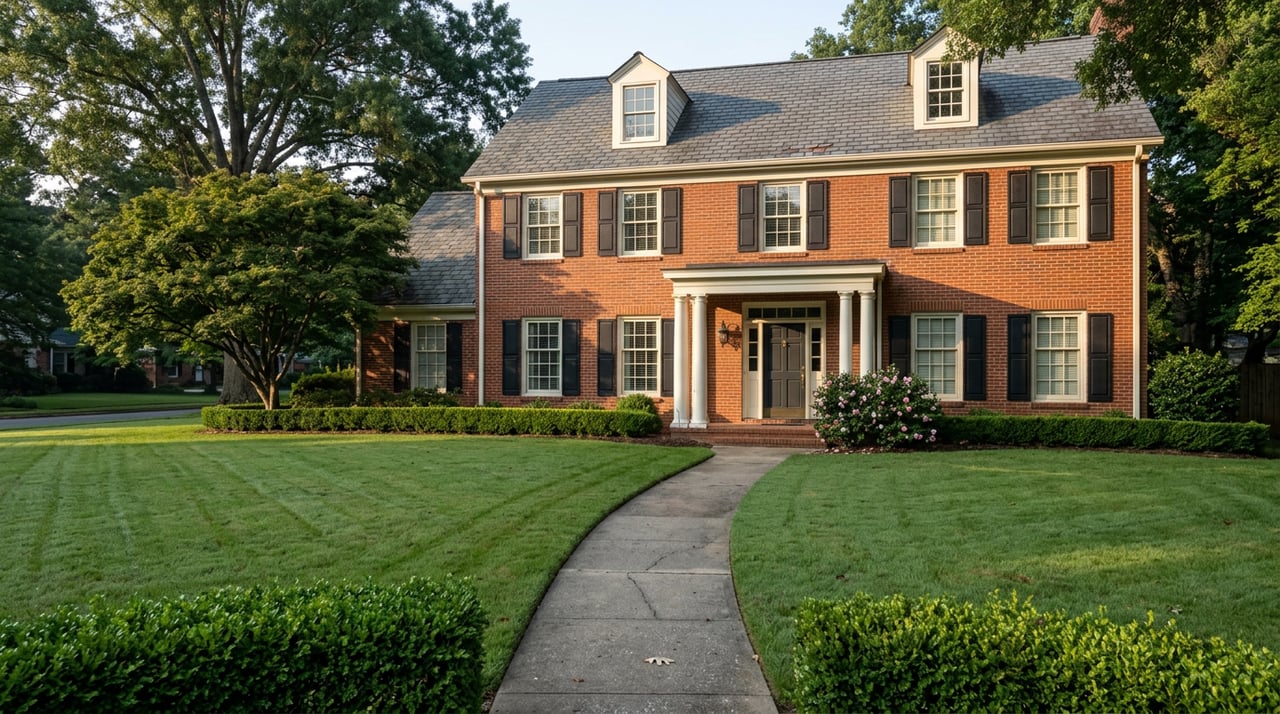
Thinking about selling your Collierville home and unsure where to start? You’re not alone. Pricing and timing feel big because they are the two levers that most affect how fast you sell and how much you net. In this guide, you’ll learn how to read today’s Collierville market, set a smart price, choose the right listing window, and prep your home for strong offers. Let’s dive in.
Collierville market now: what the numbers say
As of December 2025, Realtor.com’s Collierville snapshot showed:
- Median listing price near $559,900
- Common list price per square foot in the mid-$160s to $180s
- About 104 median days on market (DOM)
- Roughly 325 active listings
If you divide approximately 325 active listings by about 60 December sales, you get a rough 5.4 months of supply. Housing analysts view about 4 to 6 months as a balanced market, where pricing power is more even between buyers and sellers. That range helps you set realistic expectations for offers and time to contract. Learn more about months of supply and why it matters from industry analysis on inventory and balance.
A quick note on why numbers differ across websites: each platform uses different data windows and methods. Some report list prices and active inventory, while others use closed sales or automated valuations. Always check the date on any figure and use one source consistently when you compare.
Price it right by reading supply and pace
Pricing is not guesswork. It should reflect two things:
- How many similar homes are competing with you right now.
- How fast those homes are going pending and closing.
When supply is tight and homes like yours sell quickly, you can usually price closer to the top of your range and still move fast. When supply is rising or sales pace slows, you’ll need to be more conservative or expect longer DOM.
Key metrics to track
- Active listings in your price band (within about 5 to 10 percent).
- Recent monthly sales of similar homes to gauge absorption.
- Current months of supply. A figure near 4 to 6 months suggests a balanced setting. Less than 4 leans seller friendly; more than 6 favors buyers. See the balanced benchmark in this explainer on inventory.
- Sale-to-list behavior. If many homes sell above list, buyers may be bidding up strong listings. If price reductions are common, the market is signaling caution.
- The first two weeks on market. Showings, feedback, and any early offers tell you if your price and presentation hit the mark.
Best timing to list in Collierville
National seasonality studies show that spring, especially May, often delivers the strongest price premiums and faster sales because buyer activity surges. See a summary of those findings here: When is the best time to sell a house.
How this plays out locally: Collierville attracts many family and move-up buyers who plan around school calendars. That means listing in late April or May can place your home in front of a larger, motivated pool. Local lifestyle guides note that Collierville’s schools and community amenities are big demand drivers, which supports this timing pattern for sellers who can plan ahead. For context, see the Collierville city guide overview.
If you need to sell in fall or winter, build in a little more time and lean into presentation and pricing discipline. Good photos, clean staging, and fair pricing help you compete when buyer traffic is thinner.
Timeline if you’re aiming for spring
- 8 to 10 weeks out: interview agents and choose your listing partner.
- 6 to 8 weeks out: complete a Comparative Market Analysis (CMA), set your price band, and schedule prep. A practical seller guide breaks down this planning step-by-step; review the Zillow first-time sellers guide for a helpful overview.
- 3 to 4 weeks out: finish touch-ups, staging, and professional photos.
- 1 to 2 weeks out: finalize pricing and marketing, and launch before the weekend.
A simple Collierville pricing worksheet
Use this four-step framework to choose a competitive list price with confidence.
1) Pull recent comparable sales
- Gather 3 to 6 closed sales from the past 90 days in your neighborhood and price band.
- Note sale price, DOM, bed/bath count, square footage, lot, updates, and any seller concessions.
- If valid comps are scarce or your home is unique, consider a pre-listing appraisal to tighten your range. Here’s when a paid appraisal helps: is a pre-listing appraisal worth it.
2) Check your active competition
- Count how many active listings sit within roughly 10 percent of your target price.
- Track which ones are recently reduced. Frequent reductions can be a signal to price with care.
3) Measure sales pace and months of supply
- Tally how many similar homes closed in the last 30 days.
- Calculate months of supply: active listings divided by monthly sales.
- Compare your result to the balanced benchmark of about 4 to 6 months from this inventory overview. Your pricing power grows as months of supply drops, and vice versa.
4) Set a price band and decision points
- Competitive list price: the center of your target range based on comps and MoS.
- Stretch price: a test-the-market number you will use only if early signals support it.
- Fallback price: a pre-agreed adjustment you will make after a defined DOM window if showings and feedback are soft.
- Review cadence: assess showings, online saves, and agent feedback at 10 to 14 days. If traffic is below expectations, consider a calibrated price or marketing adjustment by days 21 to 30.
Prep that boosts your price without overspending
You do not have to renovate your whole home to win. Focus on items that improve first impressions and online presentation.
High-impact, cost-effective moves
- Curb appeal refresh. Tidy landscaping, fresh mulch, and updated entry hardware can make photos pop. National Cost vs. Value data show exterior projects often deliver strong recoup rates at resale. Review typical returns at Remodeling’s Cost vs. Value.
- Clean, declutter, and neutral paint. Low cost, high perceived value. Aim for bright, simple rooms with clear walkways and light window treatments.
- Professional photography and a floor plan. Most buyers start online, and high-quality media drives more showings. Build this into your launch plan.
- Targeted staging. The living room, kitchen, and primary bedroom influence buyer perception the most. NAR’s 2025 staging report found staging can reduce time on market and sometimes lift offers by a few percent, with median professional costs around the low thousands. See highlights in NAR’s staging findings.
- Pre-listing inspection for older systems or known concerns. Finding issues early helps you fix or disclose them and avoid surprise renegotiations. Review the process in NAR’s field guide to home inspections.
What to fix first
- Safety or condition items that could block financing, like major leaks, roof issues, or electrical hazards.
- Visible wear that hurts photos and first impressions, such as peeling paint, broken fixtures, or stained carpet.
- Light kitchen refreshes often go far in Collierville’s move-up market: clean counters, updated hardware, and fresh lighting can lift perceived value without a full remodel. See which projects typically recoup best at Cost vs. Value.
When to get a professional valuation
Start with a knowledgeable local listing agent for a CMA. An agent will use current MLS data to bracket your price range, advise on prep, and tailor marketing to your neighborhood.
Consider a paid pre-listing appraisal if one or more of these apply:
- Your property is unique or lacks recent comps.
- You need an independent valuation for legal or estate needs.
- You and your agent disagree on strategy, or you plan to list at an aggressive price and want support.
- You completed significant renovations and want third-party documentation of value.
For a deeper dive on when a pre-list appraisal makes sense, read: Is a pre-listing appraisal worth it.
A simple timing guide
- Agent CMA: 6 to 8 weeks before your target list date (earlier if aiming for a late April or May launch). A seller-friendly overview is available in the Zillow first-time sellers guide.
- Pre-list appraisal: 3 to 4 weeks before listing so you have time to act on the report.
- Photos and staging: 2 to 3 weeks before listing.
Local notes sellers should keep in mind
- Buyer profile. Many Collierville buyers are families and move-up households planning around the school calendar. This supports spring launches and favors homes with clean, move-in-ready presentation. See general local context in the Collierville guide.
- Neighborhood nuance. Pricing and pace can vary by micro-area and price band, from established areas near Town Square to planned communities like Porter Farms and Schilling Farms. Use neighborhood-level comps and recent DOM when you set your range.
- First two weeks matter. Monitor showings and feedback closely. If traffic is light, adjust quickly rather than waiting.
Your next steps
- Get a data-backed CMA and pricing plan 6 to 8 weeks before you want to list.
- Choose a late April or May launch if you can. If not, sharpen presentation and price for current supply.
- Focus prep on curb appeal, cleaning, paint, pro photos, and targeted staging.
- Set a price band with clear decision points at 10 to 14 days and 21 to 30 days on market.
- Consider a pre-list inspection and, if needed, a pre-list appraisal.
If you want a local plan tailored to your home and timeline, reach out. You’ll get a neighborhood-level CMA, a prep checklist, and a launch calendar that fits your goals. Connect with Deanna Wardlaw to Schedule a Consultation.
FAQs
When is the best time to sell a home in Collierville?
- Spring, especially late April through May, often delivers stronger prices and faster sales because buyer activity increases and many households plan around summer moves.
How should I price my Collierville home to sell well but not leave money on the table?
- Use recent neighborhood comps, check active competition within 5 to 10 percent of your target price, and measure months of supply. Set a price band with a review at 10 to 14 days.
How long will my Collierville home take to sell?
- Plan for a few weeks to a few months depending on price band, condition, and season. Balanced supply means well-priced, well-presented homes can still move briskly, but timing and prep matter.
What updates give me the best return before listing?
- Focus on curb appeal, cleaning, neutral paint, lighting, minor kitchen refreshes, and targeted staging. These items tend to improve photos and buyer perception at a reasonable cost.
Should I get a pre-listing inspection or appraisal?
- A pre-list inspection helps you spot issues early. A pre-list appraisal helps when your home is unique, you need an independent value, or you plan an aggressive price and want support.